%20%20--%3E%0A%3Csvg%20version%3D%221.1%22%20xmlns%3D%22http%3A%2F%2Fwww.w3.org%2F2000%2Fsvg%22%20xmlns%3Axlink%3D%22http%3A%2F%2Fwww.w3.org%2F1999%2Fxlink%22%20x%3D%220px%22%20y%3D%220px%22%0A%09%20viewBox%3D%220%200%20827.4%20200%22%20style%3D%22enable-background%3Anew%200%200%20827.4%20200%3B%22%20xml%3Aspace%3D%22preserve%22%3E%0A%3Cstyle%20type%3D%22text%2Fcss%22%3E%0A%09.st0%7Bfill%3A%23231F20%3B%7D%0A%09.st1%7Bfill%3A%230C2C56%3B%7D%0A%09.st2%7Bfill%3A%234D4D4D%3B%7D%0A%09.st3%7Bfill%3A%23FFFFFF%3B%7D%0A%09.st4%7Bfill%3A%230F9AA3%3B%7D%0A%09.st5%7Bfill%3A%23001C43%3B%7D%0A%3C%2Fstyle%3E%0A%3Cg%20id%3D%22Template%22%3E%0A%3C%2Fg%3E%0A%3Cg%20id%3D%22Layer_2%22%3E%0A%09%3Cpath%20class%3D%22st3%22%20d%3D%22M70.4%2C94.8C63.3%2C90%2C55%2C87%2C45.3%2C85.7c-7.7-1-11.8-3.1-13.1-4.7c-0.6-0.7-1.6-1.9%2C0.3-5.3%0A%09%09c1.9-3.2%2C7.7-3.9%2C12.2-3.9c5.1%2C0%2C8.9%2C1.2%2C12.6%2C3.8c4.3%2C3.1%2C9.5%2C2.9%2C13-0.7l5.1-5.1c2.1-2.1%2C3.2-4.9%2C3.1-7.7%0A%09%09c-0.1-2.8-1.4-5.3-3.7-7.2c-3.6-2.8-6.9-4.8-10.6-6.4c-5.9-2.5-13.8-3.7-23.5-3.7c-9.1%2C0-17.9%2C3-26.2%2C8.9%0A%09%09c-8.7%2C6.3-13.2%2C14.7-13.2%2C25c0%2C11.6%2C4.1%2C19.8%2C12.1%2C24.7c7.2%2C4.3%2C15.3%2C7%2C24%2C8c9.6%2C0.9%2C12.9%2C3.3%2C14%2C5.2c1.5%2C2.6%2C1.5%2C4.9%2C0%2C7.5%0A%09%09c-1.6%2C2.7-6.5%2C4.1-13.3%2C3.8c-6.9-0.3-12.3-2-16.9-5.3c-4.3-3.1-9.5-2.8-12.9%2C0.7l-5.2%2C5.1c-2.2%2C2.2-3.3%2C5-3.1%2C7.9%0A%09%09c0.2%2C2.8%2C1.6%2C5.4%2C4%2C7.2c3.7%2C2.9%2C7.4%2C5%2C12%2C7c6.8%2C2.9%2C15.3%2C4.4%2C25.4%2C4.4c10.8%2C0%2C20.4-3.3%2C28.6-9.8c8.5-6.6%2C12.8-14.7%2C12.8-24.1%0A%09%09C82.7%2C109.1%2C78.5%2C100.3%2C70.4%2C94.8z%22%2F%3E%0A%09%3Cpath%20class%3D%22st3%22%20d%3D%22M142.6%2C44.8c-15.6%2C0-28.8%2C5.3-39.2%2C15.8C92.9%2C71.1%2C87.6%2C84.3%2C87.6%2C99.9c0%2C15.5%2C5.3%2C28.7%2C15.8%2C39.2%0A%09%09c10.5%2C10.5%2C23.7%2C15.8%2C39.2%2C15.8s28.8-5.3%2C39.2-15.8c10.5-10.5%2C15.8-23.7%2C15.8-39.2c0-15.6-5.3-28.8-15.8-39.2%0A%09%09C171.4%2C50.1%2C158.2%2C44.8%2C142.6%2C44.8z%20M161.9%2C120c-5%2C5.3-11.2%2C7.9-19.2%2C7.9c-8%2C0-14.3-2.6-19.3-7.9c-5-5.4-7.4-12-7.4-20.1%0A%09%09c0-8.1%2C2.4-14.7%2C7.4-20.1c5-5.3%2C11.2-7.9%2C19.2-7.9c8%2C0%2C14.3%2C2.6%2C19.3%2C7.9c5%2C5.4%2C7.4%2C12%2C7.4%2C20.1C169.2%2C108%2C166.8%2C114.6%2C161.9%2C120z%22%0A%09%09%2F%3E%0A%09%3Cpath%20class%3D%22st3%22%20d%3D%22M248.3%2C44.8H215c-5.7%2C0-10%2C4.3-10%2C10v90.2c0%2C5.7%2C4.3%2C10%2C10%2C10h33.3c33.8%2C0%2C51.6-19%2C51.6-55%0A%09%09C299.9%2C63.8%2C282.1%2C44.8%2C248.3%2C44.8z%20M248.3%2C126.5h-14.9V73.3h14.9c15.9%2C0%2C23.2%2C8.5%2C23.2%2C26.6C271.5%2C118.1%2C264.1%2C126.5%2C248.3%2C126.5z%0A%09%09%22%2F%3E%0A%09%3Cpath%20class%3D%22st3%22%20d%3D%22M362.3%2C44.8c-15.6%2C0-28.8%2C5.3-39.2%2C15.8c-10.5%2C10.5-15.8%2C23.7-15.8%2C39.2c0%2C15.5%2C5.3%2C28.7%2C15.8%2C39.2%0A%09%09c10.5%2C10.5%2C23.7%2C15.8%2C39.2%2C15.8c15.6%2C0%2C28.8-5.3%2C39.2-15.8c10.5-10.5%2C15.8-23.7%2C15.8-39.2c0-15.6-5.3-28.8-15.8-39.2%0A%09%09C391.1%2C50.1%2C377.9%2C44.8%2C362.3%2C44.8z%20M381.5%2C120c-5%2C5.3-11.2%2C7.9-19.2%2C7.9c-8%2C0-14.3-2.6-19.3-7.9c-5-5.4-7.4-12-7.4-20.1%0A%09%09c0-8.1%2C2.4-14.7%2C7.4-20.1c5-5.3%2C11.2-7.9%2C19.2-7.9c8%2C0%2C14.3%2C2.6%2C19.3%2C7.9c5%2C5.4%2C7.4%2C12%2C7.4%2C20.1C388.9%2C108%2C386.5%2C114.6%2C381.5%2C120z%22%0A%09%09%2F%3E%0A%09%3Cpath%20class%3D%22st4%22%20d%3D%22M548.3%2C44.8c-2.6%2C0-4.9%2C1.1-6.7%2C3l-39.8%2C45.3L462%2C47.8c-1.7-1.9-4.1-3-6.7-3h-1.3c-4.2%2C0-7.3%2C4.2-7.3%2C10v90.1%0A%09%09c0%2C5.7%2C4.3%2C10%2C10%2C10h8.5c5.7%2C0%2C10-4.3%2C10-10v-42.8l19%2C21.2c2%2C2.2%2C4.7%2C3.5%2C7.6%2C3.5s5.6-1.2%2C7.6-3.5l19-21.2l0.1%2C42.9%0A%09%09c0%2C5.7%2C4.3%2C10%2C10%2C10h8.5c5.7%2C0%2C10-4.3%2C10-10V54.8C556.9%2C49.1%2C553.2%2C44.8%2C548.3%2C44.8z%22%2F%3E%0A%09%3Cpath%20class%3D%22st4%22%20d%3D%22M674.4%2C99.8c0-15.6-5.3-28.8-15.8-39.2c-10.5-10.5-23.7-15.8-39.2-15.8c-15.6%2C0-28.8%2C5.3-39.2%2C15.8%0A%09%09c-10.5%2C10.5-15.8%2C23.7-15.8%2C39.2c0%2C15.5%2C5.3%2C28.7%2C15.8%2C39.2c10.5%2C10.5%2C23.7%2C15.8%2C39.2%2C15.8c15.6%2C0%2C28.8-5.3%2C39.2-15.8%0A%09%09C669.1%2C128.6%2C674.4%2C115.4%2C674.4%2C99.8z%20M638.6%2C119.9c-5%2C5.3-11.2%2C7.9-19.2%2C7.9c-8%2C0-14.3-2.6-19.3-7.9c-5-5.4-7.4-12-7.4-20.1%0A%09%09c0-8.1%2C2.4-14.7%2C7.4-20.1c5-5.3%2C11.2-7.9%2C19.2-7.9c8%2C0%2C14.3%2C2.6%2C19.3%2C7.9c5%2C5.4%2C7.4%2C12%2C7.4%2C20.1C645.9%2C108%2C643.5%2C114.5%2C638.6%2C119.9%0A%09%09z%22%2F%3E%0A%09%3Cpath%20class%3D%22st4%22%20d%3D%22M811.6%2C60.6c-10.5-10.5-23.7-15.8-39.2-15.8c-15.6%2C0-28.8%2C5.3-39.2%2C15.8c-10.5%2C10.5-15.8%2C23.7-15.8%2C39.2%0A%09%09c0%2C15.5%2C5.3%2C28.7%2C15.8%2C39.2c10.5%2C10.5%2C23.7%2C15.8%2C39.2%2C15.8c15.6%2C0%2C28.8-5.3%2C39.2-15.8c10.5-10.5%2C15.8-23.7%2C15.8-39.2%0A%09%09C827.4%2C84.3%2C822.1%2C71.1%2C811.6%2C60.6z%20M791.6%2C119.9c-5%2C5.3-11.2%2C7.9-19.2%2C7.9c-8%2C0-14.3-2.6-19.3-7.9c-5-5.4-7.4-12-7.4-20.1%0A%09%09c0-8.1%2C2.4-14.7%2C7.4-20.1c5-5.3%2C11.2-7.9%2C19.2-7.9c8%2C0%2C14.3%2C2.6%2C19.3%2C7.9c5%2C5.4%2C7.4%2C12%2C7.4%2C20.1C799%2C108%2C796.5%2C114.5%2C791.6%2C119.9z%22%0A%09%09%2F%3E%0A%09%3Cpath%20class%3D%22st4%22%20d%3D%22M700%2C44.8h-8.3c-5.7%2C0-10%2C4.3-10%2C10l0.1%2C87.6v9.4c0%2C7.5-2.9%2C10.8-9.7%2C11l-0.8%2C0v-4.5c0-1.3-0.7-2.6-1.7-3.1%0A%09%09c-0.3-0.2-0.7-0.3-1.1-0.3c-0.7%2C0-1.4%2C0.3-1.9%2C0.9l-16.2%2C19c-0.5%2C0.6-0.8%2C1.5-0.8%2C2.4s0.3%2C1.8%2C0.8%2C2.4l16.2%2C19%0A%09%09c0.5%2C0.6%2C1.2%2C0.9%2C1.9%2C0.9c0.4%2C0%2C0.7-0.1%2C1.1-0.3c1-0.5%2C1.7-1.7%2C1.7-3.1v-6.6h7.9c8.9%2C0%2C16.4-2.9%2C22.2-8.7l0%2C0%0A%09%09c5.7-5.7%2C8.6-13.3%2C8.6-22.5l0-16.2V54.8C710%2C49.1%2C705.7%2C44.8%2C700%2C44.8z%22%2F%3E%0A%3C%2Fg%3E%0A%3C%2Fsvg%3E%0A)

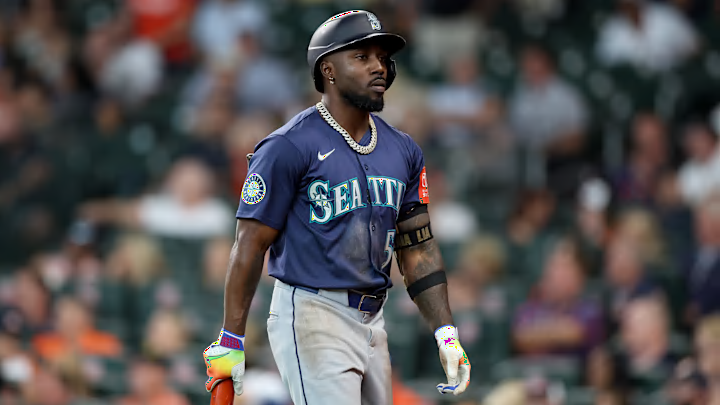
The Seattle Mariners are still in first place in the American League West, but their lead is now two games smaller than it was when they rolled into Houston on Thursday.
The Astros made that happen by taking three of the four games the two clubs played over the weekend, with Christian Walker putting the series to bed in style for the home team with a walk-off two-run home run on Sunday.
WALK(ER) - OFF.#BuiltForThis pic.twitter.com/n6sZvAux3Y
— Houston Astros (@astros) May 25, 2025
Again, the Mariners are still in first place. And even if they did lose three out of the last four games, they did ultimately go 6-4 on a 10-game road trip that began with an impressive sweep of the San Diego Padres.
Nonetheless, bad baseball must be called out as such. So without further delay, let's get deeper into this series and assign grades for how the Mariners played.
Mariners vs. Astros Breakdown and Grades: Series Results
- Thursday, May 22: SEA 2, HOU 9
- Friday, May 23: SEA 5, HOU 3
- Saturday, May 24: SEA 1, HOU 2
- Sunday, May 25: SEA 3, HOU 5
Grading the Mariners’ Offense: F
If this series reinforced any positives for the offense, it's that the Mariners have Bryan Abreu's number.
Whereas the Astros righty has allowed zero earned runs against every other team this year, he's allowed five against Seattle. Three of those came in a Randy Arozarena-induced comeback on April 9, with the other two coming on Friday. He's twice gotten burned on the same fastball by Julio Rodríguez, and an inside slider got turned around for a go-ahead homer by Cal Raleigh.
Dumped.
— Seattle Mariners (@Mariners) May 24, 2025
Doink. pic.twitter.com/9rQDbjSfyL
The Mariners otherwise weren't lacking for baserunners throughout this series, collecting 36 hits and 15 walks in the four games. They were especially patient against Framber Valdez on Saturday, working the ace lefty for four free passes in six innings.
So how did they only score 11 runs despite all that traffic? Falling flat with runners in scoring position on Thursday (2-for-10), Saturday (0-for-6), and Sunday (2-for-10) is part of it, but even those numbers only partially tell the story of how many at-bats were wasted by the Mariners.
They struck out 10-plus times in all four games to continue what has unfortunately become a running theme. Whereas the Mariners had 10 such games through May 8, they have 11 since then. The club's strikeout rate has risen accordingly, now ranking fourth in the American League at 23.3 percent.
It also bears noting that the aggressive baserunning that was admirable earlier in the season is starting to hurt the Mariners. They were a little too disrespectful of Jose Altuve's arm in Friday's game, which also saw Leody Taveras get picked off of first base.
Grading the Mariners’ Defense: D
Our usual line about Seattle's defense is that, if nothing else, it tends to be clean. The Mariners have made only 23 errors all year, exactly half as many as the league-leading Colorado Rockies.
There was nothing clean about the first inning on Saturday, however. Bryan Woo and Leo Rivas made errors on back-to-back pitches, resulting in the only two runs the Astros needed to win the game. As noted by Tim Booth of The Seattle Times, it's already the second time this year that the Mariners have lost a game to Houston in which they didn't give up any earned runs.
A pair of errors on consecutive pitches has led to two runs and put Bryan Woo and the Mariners behind here in the 1st inning. pic.twitter.com/uTBsDvxiZA
— Daniel Kramer (@DKramer_) May 24, 2025
Though the Astros likely would have won the game anyway, there was also a play on Thursday in which Ben Williamson bobbled what would have been an easy double play ball off the bat of Isaac Paredes. More sloppy defense took place on Sunday, with Dylan Moore and J.P. Crawford taking turns putting the game in jeopardy with a misplay and a bad throw, respectively.
There were some defensive highlights in this series, of course. Williamson redeemed himself with a nice diving play on Friday, and we're still thinking about that nifty pick by Crawford on a sharp grounder by Altuve on Thursday. And on Sunday, Taveras helped kill a rally with a tough leaping catch up against the right field wall.
Even still, this series saw the defense give one game away before nearly giving another away the very next day. That just can't happen.
Grading the Mariners’ Pitching: B
On the matter of George Kirby, the hype that naturally accompanied his return off the injured list on Thursday began fading as soon as he threw his first pitch.
He hit Jeremy Peña with that one, thus beginning a 3.2-inning stint in which he was in frequent trouble. It was nice to see him get his fastball up to 97.6 mph, and he did have one decidedly Kirby-esque strikeout on a perfectly dotted heater. On the whole, though, he wasn't as sharp as usual and the Astros took advantage by getting to him for six hits and five runs.
The Mariners otherwise got quality starts from Emerson Hancock on Friday and from Bryan Woo on Saturday. Hancock showcased elevated velocity for a second start in a row, sitting at 95.5 mph with his four-seamer. And while Woo was in near-constant trouble, he was consistently able to make pitches when he needed to.
Though he was asked to do too much — more on that in a second — Luis Castillo continued to age gracefully on Sunday. His velocity was up across the board and he made it three quality starts in the series with six innings of three-run ball.
Luis Castillo, Vicious 88mph Slider. 😤 pic.twitter.com/ApbMObaeKC
— Rob Friedman (@PitchingNinja) May 25, 2025
Save for the since-DFA'd Jesse Hahn, this series started off strong for the bullpen as well. It held the Astros scoreless on Friday and Saturday to lower its ERA for May to 2.87, easily the best such mark among American League clubs.
The shine wore off as soon as Walker took Casey Legumina deep for the win on Sunday, but we don't want to go too hard on the right-hander. After he threw 22 pitches in a multi-inning stint on Saturday, why it was him on the mound and not Andrés Muñoz is frankly baffling.
Grading the Mariners’ Strategy: F
For anyone who hasn't read it, Adam Jude of The Seattle Times has a must-read piece on Dan Wilson and how he's changed the culture of the Mariners since taking over for Scott Servais last year. Wilson comes off as a classic player's manager, and that is not a bad thing.
This said, the last two days don't reflect well on his in-game managing.
Though he ended up logging a quality start, Wilson paid for asking Castillo to work through the sixth inning and to ultimately throw 116 pitches. He was still throwing hard at that point, but he missed his spot on the fastball that Cam Smith hit for a game-tying double.
CAM THE MAN COMES THROUGH!#BuiltForThis pic.twitter.com/lyXbfRhHLh
— Houston Astros (@astros) May 25, 2025
With the game still tied going into the eighth, the smart play would have been to call on Matt Brash for that frame and then Muñoz for the ninth. The Mariners have rightfully been conservative with Brash's usage, but Wilson eventually did call his number after he wasn't used Saturday. Muñoz likewise got a breather.
Instead, Wilson started the eighth and ninth with Collin Snider and Legumina. The former almost blew it, while the latter obviously did. Even if the game had been tied, Muñoz should have at least gotten the chance to send it to extra innings.
Let's also take Wilson to task for how he handled the offense on Saturday. It was odd to see Mitch Garver have the green light on a 3-0 count and a runner on third with nobody out, resulting in a groundout. And later, he didn't bring either Jorge Polanco or Rowdy Tellez off the bench for Garver to gain the platoon advantage against Abreu. That resulted in a looking strikeout to strand Rodríguez at second base.
Perhaps it is worth something that Wilson showed some fire and got himself ejected for the first time in his career at the end of Sunday's game. And if we're being real, it's the offense and defense that lost this series for the Mariners, not the manager.
When it comes down to it, though, this is a series that the Mariners could have and arguably should have won. They now have an off day on Monday lick their wounds before they're back at it, with the Washington Nationals set to arrive in Seattle for a three-game set that starts on Tuesday.
 Add us as a preferred source on Google